
Fact or Fiction: How Can Students Tell What’s True in the Age of Misinformation?


Today we live in a world where information is everywhere. We scroll on TikTok, Instagram, Snapchat, and Google every day. News spreads in seconds. But the problem is, not everything we see is true. Sometimes it is hard to tell what fact is and what is fiction. This is called information overload when there is so much information that it becomes confusing.
My mom experienced this before. One day she saw news online saying that the earlier president of Afghanistan had died. The post looked serious, and many people were sharing it. She believed it because it seemed real and everyone was talking about it. She even felt shocked and sad. But when I checked reliable news websites, I could not find any official report about it. Later we realized the information was false. It was just a rumour spreading on social media. That moment made both of us understand how easily people can believe something online without checking if it is true first. It showed me how powerful misinformation can be.
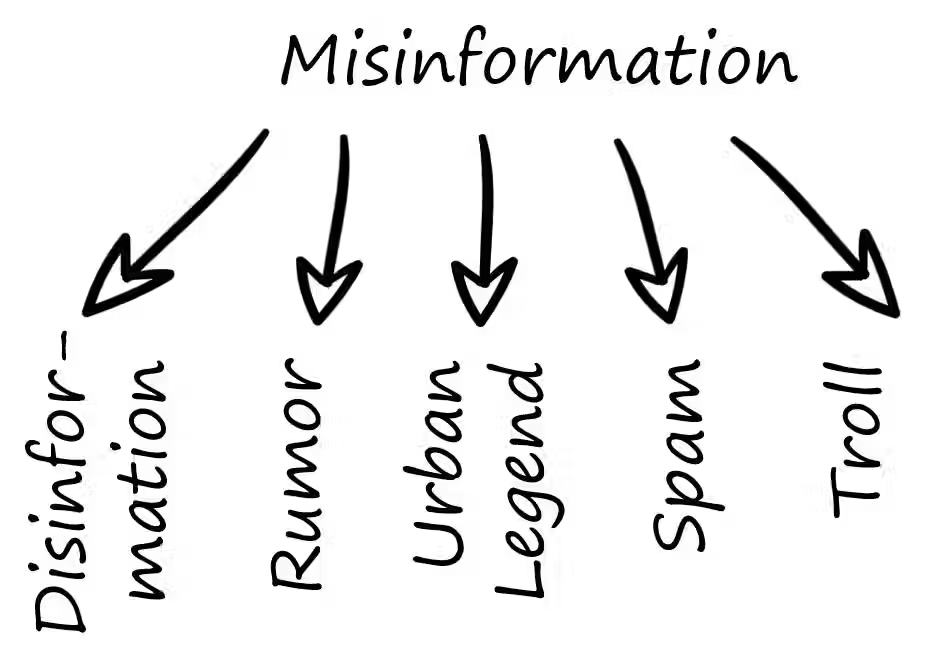

So why do people believe misinformation? Philosophically, it is because humans are emotional. We often believe things that match our feelings or opinions. If something makes us angry or scared, we react fast instead of thinking deeply. Social media also uses algorithms that show us content we already agree with. This creates “echo chambers,” where we only hear one side of the story.
Research from the CBC shows that many people struggle to tell real news from fake news online. Also, UNESCO explains that media and information literacy are important skills students need today. Without these skills, it is easy to be misled.
what can students do?
First, we should always check the source. Is it a trusted news organization? Is the author named? If it is just a random account with no evidence, that is a red flag.
Second, we should cross-check information. If something is true, more than one reliable source will report it. For example, organizations like BBC or other well-known news platforms usually verify information before publishing.
Third, we need to slow down. Misinformation spreads fast because people react fast. Taking a few minutes to think and research can prevent us from spreading false information.
In conclusion, living in the age of misinformation is challenging, but it is possible to manage. We need critical thinking, digital literacy, and self-control. Truth does not always shout the loudest, but it is our responsibility as students to search for it carefully. In a world full of noise, thinking before believing is one of the most powerful skills we can have.
Wong, J. (2023, May 15). Students say misinformation abounds online. Experts say critical thinking helps them navigate it. CBC. https://www.cbc.ca/news/canada/education-mis-disinformation-1.6836531


Comments